Dementia and Alzheimer's Care at Home, Built Around Familiar Routines
Maybe your mother has started asking the same question several times. Your father gets confused about what day it is, or a familiar evening routine has become difficult.
At first, you find ways to manage these changes yourself. But as memory loss progresses, even ordinary days can bring new concerns.
At Homewatch CareGivers of Newton-Wellesley, we provide compassionate in-home dementia and Alzheimer's care for families in Newton, Wellesley, Needham, and surrounding communities.
Our caregivers help individuals living with memory loss manage daily activities, maintain familiar routines, and stay engaged in the home they know. We also support family members as they adjust to changing care needs.
Let's talk about your loved one's needs. Call (617) 885-9483.
Dementia Changes Daily Life, Not Just Memory
Memory loss is often the first change families notice. But dementia can also affect communication, judgment, mood, and the ability to complete familiar tasks.
Someone who once enjoyed preparing dinner may forget a step in the recipe. A person who has lived in the same house for decades may become confused about where things belong. Even getting dressed can feel frustrating when decisions become difficult.
These changes don't happen the same way for everyone.
Some individuals need gentle reminders and companionship. Others need consistent assistance with personal care, meals, or supervision.
The goal of dementia home care isn't to take away independence. It's to understand what your loved one can still do, offer help where needed, and respect their preferences.
What Does In-Home Dementia Care Include?
Good dementia care starts with knowing the person, not just their diagnosis.
Our caregivers consider your loved one's routines, interests, abilities, and communication preferences when providing nonmedical support.
Depending on their needs, care may include:
- Personal care: Help with bathing, dressing, grooming, and toileting
- Daily routines: Gentle reminders and step-by-step guidance
- Meals and hydration: Meal preparation and reminders to eat and drink
- Companionship: Conversation, music, hobbies, and familiar activities
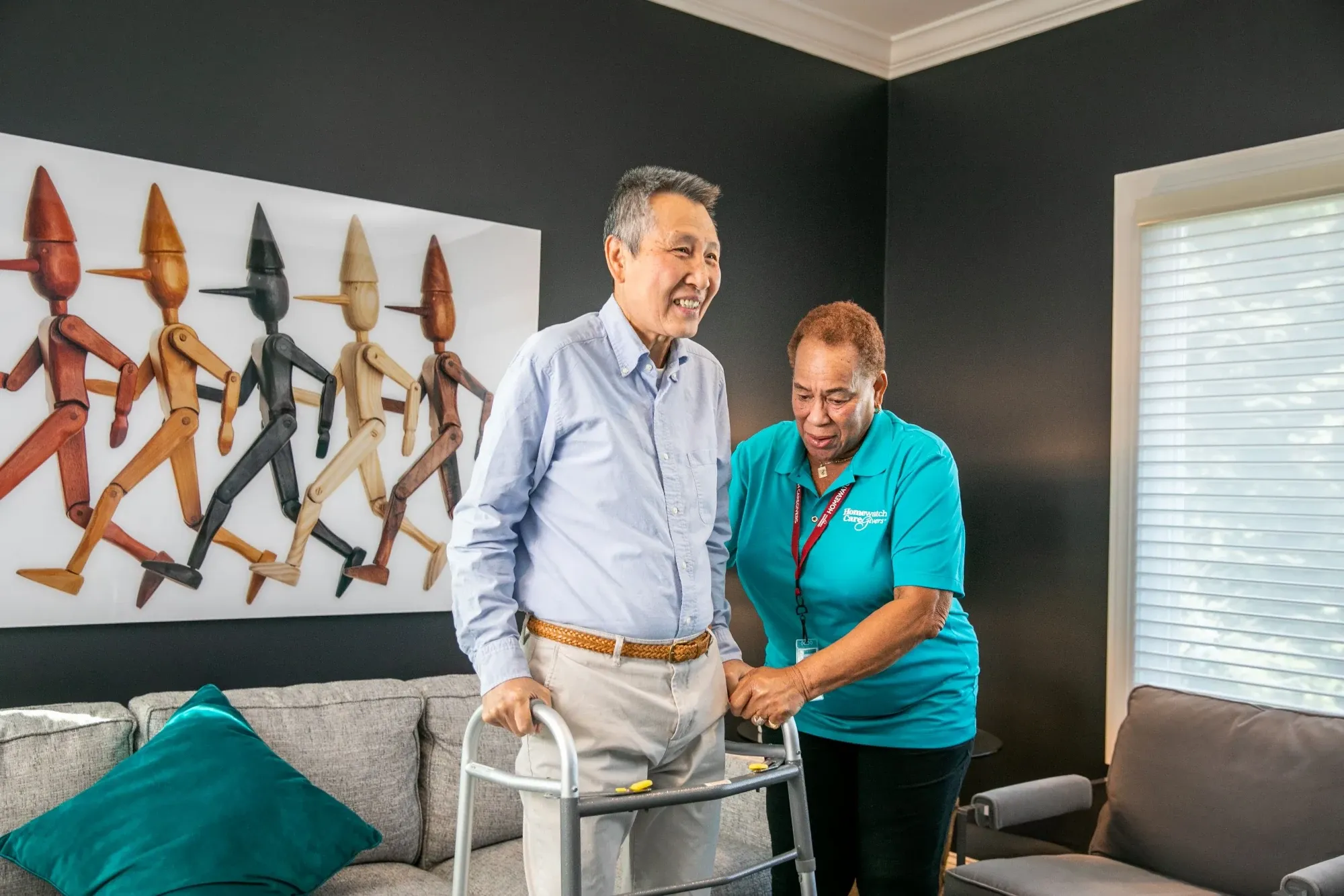
- Mobility assistance: Help with walking and transfers according to the care plan
- Safety awareness: Supervision during scheduled visits and communication of concerns
- Family support: Sharing everyday observations and keeping relatives informed
Our caregivers focus on what your loved one enjoys and can comfortably participate in, rather than expecting them to follow a rigid schedule.
Why Familiar Routines Matter in Dementia Care
For someone living with dementia, familiar routines may provide comfort when other things begin to feel confusing.
A favorite breakfast, an afternoon walk, or listening to familiar music can help maintain a connection with everyday life.
Our caregivers take time to learn these preferences.
If your loved one enjoys gardening, they may still participate in simple gardening activities with appropriate assistance. If too many choices become overwhelming, a caregiver can offer one or two options instead of asking an open-ended question.
Difficult moments can happen, too. A loved one may resist getting dressed, become upset by a change in routine, or struggle to explain what they need.
Our caregivers use patient communication and gentle redirection, allowing extra time rather than rushing through activities.
When Is It Time to Consider Dementia Care at Home?
Families often wonder whether they're seeking help too early or waiting too long.
You don't need to wait until your loved one requires constant supervision.
It may be time to explore home care if you've noticed:
- Confusion during familiar activities
- Difficulty remembering meals or personal hygiene
- Anxiety or frustration with everyday tasks
- Wandering or leaving home unexpectedly
- A growing need for supervision
- Family caregivers struggling to manage alone
Discuss new or worsening symptoms with a healthcare professional.
If your loved one needs assistance throughout the day and night, our 24-hour home care services may be worth exploring.
Caregivers provide assistance during scheduled hours, but home care cannot guarantee that wandering, falls, or other incidents will not occur.
Dementia Care at Home vs. a Memory Care Community
Families often wonder whether their loved one should continue living at home or move into a residential memory care community.
In-home dementia care allows individuals to remain in familiar surroundings while receiving help with personal care, daily routines, companionship, and supervision during scheduled visits.
Residential memory care communities provide housing, structured activities, and on-site staff in a setting designed for people with memory-related conditions.
Neither option is right for everyone.
The decision depends on your loved one's needs, safety concerns, preferences, and the amount of support available at home. Discuss changing medical and supervision requirements with their healthcare team.
Dementia & Alzheimer's Care Across Newton-Wellesley
A familiar home can hold years of memories, from family dinners to quiet mornings in a favorite room.
For someone living with dementia in Newton Centre or Waban, maintaining these surroundings may be an important part of their daily comfort.
Families arranging home care in Newton may need help with morning routines or supervision while relatives work.
In Wellesley, an older adult living alone may benefit from companionship and meal reminders. Families in Weston may need more consistent support as memory and communication needs change.
We also serve Needham, Waltham, and nearby communities. Visit our Areas We Serve page for more information.
Supporting the Family Behind the Care
Dementia affects more than the person receiving the diagnosis.
Spouses may find themselves managing care throughout the day. Adult children may be coordinating appointments, checking in regularly, and worrying about what happens when they aren't there.
It's a lot to carry, especially as needs change.
Our caregivers can share everyday responsibilities while family members remain involved in important decisions.
If you need time for work, appointments, or rest, our respite care services offer temporary assistance.
You can continue being a spouse, son, daughter, or friend without handling every caregiving task yourself.
A Caregiving Approach Built Around the Individual
No two people experience dementia in exactly the same way. Their care shouldn't look exactly the same either.
Homewatch CareGivers emphasizes person-centered support, caregiver training, background screening, and communication with families.
Our approach considers your loved one's preferences, established habits, abilities, and response to assistance.
As needs change, our Newton-Wellesley team can discuss adjustments to daily support and scheduling. Clinical treatment and medication management remain with licensed healthcare professionals.
Let's Find the Right Support for Your Family
You may be noticing the first changes in your loved one's memory, or you may have been managing dementia-related care for some time.
Either way, you don't need every answer before reaching out.
Homewatch CareGivers of Newton-Wellesley helps families explore compassionate dementia and Alzheimer's care centered on each person's needs and familiar routines.
Call (617) 885-9483 to discuss care options in Newton, Wellesley, Needham, Weston, Waltham, and nearby communities.