
If you had to leave your loved one alone for two hours today, would you feel calm, or would you feel like you were taking a risk you cannot afford?
After a brain injury, families often try to do everything themselves at first. That instinct comes from love, loyalty, and the very real desire to keep life normal. But brain injury recovery is not always predictable, especially at home, where routines, stairs, bathrooms, medications, and nighttime confusion can quickly turn into safety issues. The point of 24-hour care is not to take your place. It is to keep your loved one safe while you regain a sustainable rhythm and make smart decisions instead of exhausted ones.
Table Of Contents:
- What Round The Clock Care Means After a Brain Injury
- When 24 Hour Care Is Worth It
- How to Set Up Support That Actually Helps
- Conclusion
- FAQs
We are writing this in a plain, practical way because the biggest question we hear is simple. When is round the clock care truly necessary, and when is it just a nice idea? You deserve an answer that respects both safety and cost.
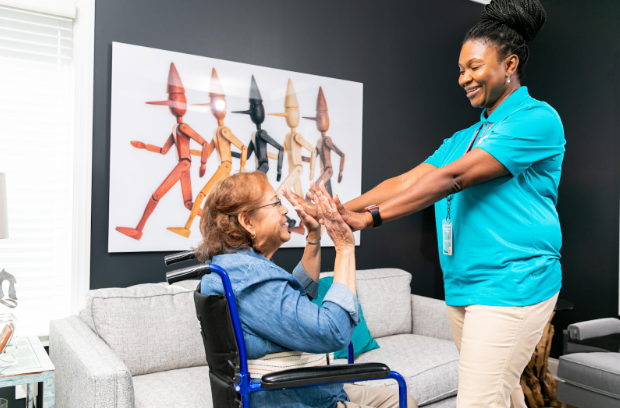
What Round The Clock Care Means After a Brain Injury
People use the phrase 24 hour care in different ways, so it helps to define it clearly before you plan anything. In home care, true 24 hour coverage usually means awake support throughout the day and night, most often with rotating shifts so the person providing care stays alert. That distinction matters because some arrangements that sound similar are not the same in practice.
In many care models, 24 hour care means continuous coverage with planned shift changes so someone is awake and present overnight. Live in care often means one caregiver stays in the home and sleeps at night, helping as needed. Living in can work for some situations, but it can be the wrong fit when nighttime confusion, frequent toileting, wandering, or unsafe mobility make overnight support unpredictable.
In our world, 24 hour care is about consistent supervision plus help with daily tasks that become harder after a brain injury. That can include mobility support, toileting and bathing assistance, meal preparation, medication reminders, light housekeeping, and companionship, all coordinated around the needs of the client and the family.
Brain injuries can affect much more than movement. Many people experience changes in behavior, coping skills, and motivation, along with cognitive challenges like trouble with decision making, planning, organizing, attention, and memory. When those changes show up at home, families may see impulsive choices, poor safety awareness, sleep disruption, frustration, or a mismatch between what the person believes they can do and what they can safely do. That gap is one of the biggest reasons 24 hour care becomes the safer option.
There is also a practical family side to this. You might be juggling work, kids, medical appointments, and household basics, all while trying to supervise someone who may need help at any moment. If your home is running on fumes, it is hard to make good decisions, and it is even harder to stay patient.
One quick clarification that helps. 24 hour care is not automatic forever. For many clients, it is a bridge. It can cover the high risk weeks after discharge, the period when sleep is unstable, or the phase when falls and confusion are most likely. Then it can taper to overnight support, daytime blocks, or scheduled coverage once routines settle.
When 24 Hour Care Is Worth It
You do not need to wait for a crisis to justify more support. In fact, the best time to start planning is when you can still think clearly. Families often decide on 24 hour care after one frightening moment, a fall, a nighttime wandering episode, a missed medication, or a shower that turned unsafe. But you can make the decision earlier by watching for patterns that indicate risk.
Some families start by searching online for brain and spinal injury care and end up overwhelmed by vague advice. A better approach is to look at your exact day and night and ask where safety breaks down, where fatigue breaks down, and where supervision is truly required.

Red Flags That Call For 24 Hour Coverage
If any of the situations below feel familiar, you should take them seriously. Not because you are doing anything wrong, but because these are common turning points where supervision matters more than good intentions.
One red flag is unsafe mobility. If transfers are shaky, if balance is unpredictable, or if your loved one tries to stand or walk without help, the bathroom and nighttime trips can become the highest risk moments of the day. Even a small fall can set recovery back and create fear that makes movement worse.
Another red flag is poor safety judgment. After a brain injury, a person may forget they are not cleared to drive, try to cook and leave the stove on, wander outside, or insist they do not need help. The hardest part is that confidence can return before judgment returns, so your loved one may genuinely believe they are fine even when you can see they are not safe yet.
Nighttime risk is its own category. If your loved one wakes confused, gets up repeatedly, or is restless and impulsive at night, it can be dangerous to rely on a sleeping household to respond in time. Families often underestimate nights because the home feels quiet, but that is exactly when supervision gaps are widest.
Medication management is another major reason for 24 hour support. When attention and memory are affected, even a well organized pill box can fail if the person double doses, refuses meds, or forgets entirely. This is also where caregiver fatigue shows up. When you are sleeping in fragments, you are more likely to miss a dose, misread a label, or forget what time the last dose was.
Behavior changes can also make care unpredictable. Irritability, agitation, denial, and frustration can make routine tasks like bathing or eating feel like an argument instead of a simple moment. When that happens, having steady support can protect both safety and relationships, because you are not trying to solve everything while emotionally depleted.
Finally, consider the reality of your household. If you are a solo caregiver, if you have children, if you work outside the home, or if you are handling multiple responsibilities, there may not be enough margin for you to provide continuous supervision safely. A key goal of 24 hour care is to keep the environment stable so you are not operating in constant alarm.
This is where caregivers' attention changes everything. When supervision is consistent, small problems get handled early, routines stay calmer, and you are less likely to reach the end of the day feeling like you survived it rather than lived it.
How to Set Up Support That Actually Helps
Once you decide 24 hour care makes sense, the next step is designing it so it works in real life. Families often imagine care as a generic service, but the best plans are specific. They reflect your loved one’s triggers, mobility needs, sleep patterns, and what a good day looks like.
Start with the transition home. Many people improve when they are back in familiar surroundings, but the return home can still be complex. You are coordinating follow up care, therapy, medication schedules, nutrition, sleep, and basic daily living, often while your loved one is still adjusting cognitively and emotionally.

Home setup matters more than most people expect. Clear pathways, remove loose rugs, reduce clutter and cords in walkways, and make lighting bright and consistent, especially between the bedroom and bathroom. If the bathroom is tight, add non-slip mats and grab supports, and make sure you have a safe plan for showering. If your loved one uses a walker or wheelchair, make room to turn safely. If they have poor impulse control, consider door alerts or simple cues that remind them to ask for help.
Then get clear on what coverage you actually need. Some families need overnight care right away, while others mainly need a second set of hands during the day for transfers, bathing, meal routines, and therapy homework. The key is matching the schedule to the high risk hours, not to what sounds standard.
Here is one practical way to structure your start plan, keeping it realistic and not overwhelming.
- Identify the three riskiest times of day and cover those first
- Write a simple daily routine with meds, meals, therapy, and rest
- List safety rules that are non negotiable, like no solo showering
- Make the home safer with lighting, cleared paths, and grab support
- Plan caregiver handoffs so updates do not get lost between shifts
Communication should be simple and consistent. Brain injury recovery can make processing slower, so routines work best when instructions are calm, short, and repeated the same way. Give extra time for replies, reduce background noise when you are explaining something, and use clear cues rather than long explanations during stressful moments.
If you are comparing providers or deciding what questions to ask, focus on reliability and continuity. You want to know how schedules are built, how overnight alertness is handled, and how notes are shared between shifts so important details do not get lost. You also want support that respects the person’s dignity. Help should feel steady and normal, not intrusive.
In our day to day work through Homewatch CareGivers of East Atlanta, we often see the same mistake families make. They wait until they are fully burned out to bring in help. The better path is to build support early, stabilize the home routine, and then taper when safety improves.
Conclusion
24 hour care makes sense after a brain injury when safety cannot be guaranteed with occasional check-ins, when nights are unpredictable, when mobility and judgment are unstable, or when your household is too stretched to provide consistent supervision. The decision is not about whether your family loves enough. It is about whether your current support system can cover the real risks without breaking down.

If you are unsure, focus on patterns. Look at falls or near falls, nighttime confusion, medication mistakes, unsafe choices, and caregiver fatigue. When those patterns show up, round the clock coverage can prevent emergencies and protect recovery. It can also protect your relationship with your loved one, because the more exhausted you are, the harder it is to stay patient and calm.
Your goal is not to do everything. Your goal is to build a stable home routine where healing is possible and where you can be a family again, not just a tired set of hands.
Steady 24 Hour Support That Keeps Recovery Safer at Home
→ Get reliable day and night supervision when safety is uncertain
→ Support routines for meds, mobility, meals, and nighttime needs
→ Reduce family burnout with consistent help and clear handoffs
Contact Homewatch CareGivers of East Atlanta to discuss 24 hour care options in Decatur →
★★★★★ 4.9 by 74+ families across East Atlanta for reliable, high-quality caregiving services
Homecare tips:
Making Home The Best Place To Age With Care In East Atlanta
How Personal Care Preserves Dignity And Daily Routine