
What would it feel like if your home quietly adjusted to each new season of your life instead of asking you to work harder every year?
We talk with many families who want exactly that feeling. They want aging in a place that feels natural, not clinical. They want hallways that feel calm, bathrooms that feel safe, and routines that still feel like their own. Guidance on aging in place almost always circles back to the same themes: better lighting, fewer trip hazards, simple bathroom changes, and smart use of support at home.
Table Of Contents
- Safer Paths For Everyday Movement
- A Supportive Bathroom That Protects Privacy
- A Bedroom That Helps With Rest And Recovery
- Living And Kitchen Spaces That Work With You
- Gentle Support From People And Simple Technology
- Conclusion
- FAQs
Through our work with families in Broward County, we see how a handful of changes can transform a familiar house into a place that truly fits aging at home. This blog focuses on five practical ways to prepare your home so it stays comfortable, safe, and supportive for the years ahead.
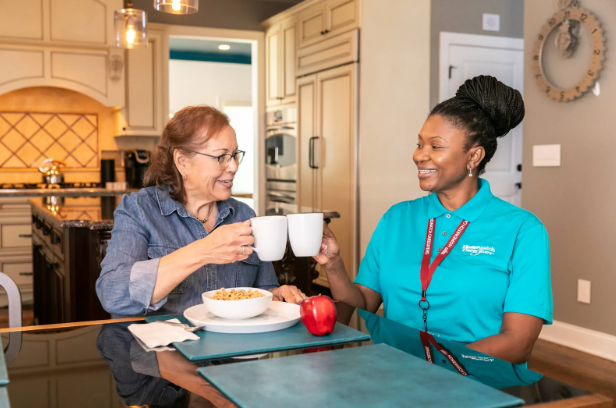
Safer Paths For Everyday Movement
If you watched a video of yourself walking through your home, where would you see small stumbles, tight corners, or places where you reach for a wall
We like to start with movement because it affects almost every part of the day. Most home safety checklists for older adults begin with simple steps such as clearing walkways, improving lighting, and securing rugs to lower the risk of falls in key areas like hallways and stairs.
We walk the same route a client uses many times a day. From the front door to a favorite chair. From bed to bathroom. From kitchen to dining table. Along that path we look for three things in particular
- Anything that can catch a foot such as loose rugs, cords, pet toys, or low tables
- Tight spaces where a walker, cane, or helping arm would not comfortably fit
- Sudden changes in height like unexpected steps or raised thresholds
Soft lighting is helpful, but we often suggest brighter, even lighting in entry areas, hallways, and stairways. Many fall prevention guides now emphasize light that turns on quickly and eliminates shadows on the floor, especially at the top and bottom of stairs and near exterior doors.
We also pay attention to how many times someone changes direction. A small adjustment such as shifting a side table or chair can remove an awkward twist and make it easier for a person using a cane or walker to move in a straight, steady line. Over time, those little changes save energy and reduce risk more than families expect.

A Supportive Bathroom That Protects Privacy
If the bathroom feels like the most stressful room in the house, it becomes easy to delay bathing or rush through it, which does not serve safety or dignity. Guides to home design for aging in place nearly always highlight the bathroom as a top priority because water, slick floors, and tight spaces meet in one small area.
When we review a bathroom, we picture each step of the visit. Walking in, turning around, using the toilet, reaching for toilet paper, washing hands, stepping into the shower, and getting out again. We want those motions to feel steady and predictable, not tentative or hurried.
Simple changes make a large difference. Grab bars near the toilet and in the shower give a secure place to hold. A non-slip surface underfoot matters more than many people realize, especially if someone is on medications that affect balance. We also look at the height of the toilet and the edge of the tub. A slightly higher seat and a lower step into the shower can reduce strain on hips and knees.
Lighting is just as important here as in hallways. We want enough light for someone to see the edges of the tub, the floor, and fixtures without glare. For some clients we suggest a soft night light so the bathroom still feels familiar in the middle of the night.
Many of the personal care tasks in the bathroom, such as bathing, dressing, and getting safely on and off the toilet, fall under personal care at home. When caregivers help in a bathroom that already has secure grab bars, non-slip flooring, and clear pathways, clients can usually stay more involved in their own care and feel less like things are being done for them.

A Bedroom That Helps With Rest And Recovery
We often ask people one question in the bedroom. Does this room help you relax, or does it quietly make your body work harder than it should
For comfortable aging at home, the bedroom should support rest, recovery, and easy movement at night. Many experts on aging in place recommend planning the main sleeping space on the ground floor when possible and pairing that with a layout that keeps pathways short and level.
We look first at getting in and out of bed. If someone has to push themselves up from a very low mattress or sink deeply into a soft bed, they may eventually avoid resting during the day because getting up feels like too much work. A mattress height that lets both feet rest flat on the floor and allows a smooth stand can change that experience completely. A sturdy bedside table within easy reach is another small but important support.
Nighttime trips to the bathroom are a common source of falls. Soft, low level lighting that stays on or turns on automatically can help a person see the floor without being jolted fully awake. We also think about where glasses, water, a phone, or a call device sit. When those items are always in the same simple spot, anxiety about “what if something happens while I am in bed” tends to loosen.
For some clients, the bedroom is where they spend a large part of the day due to chronic illness or fatigue. In those cases we plan space for reading, television, or quiet hobbies, along with room for a caregiver to assist on either side of the bed. That planning allows the room to feel like a personal retreat instead of a sickroom.
Living And Kitchen Spaces That Work With You
When you picture your ideal day at home, do you see yourself stuck in one chair or moving comfortably between the sofa, dining table, and kitchen?
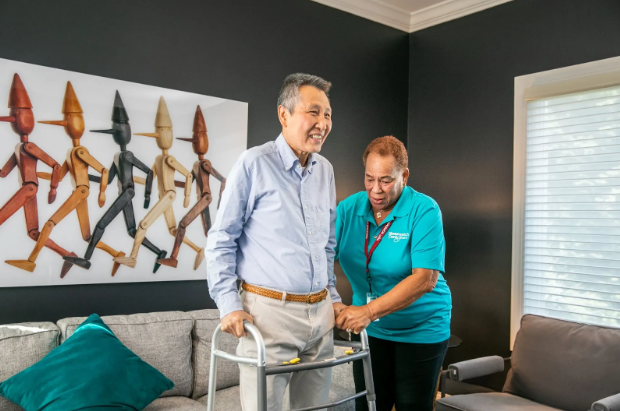
We want living areas and the kitchen to feel open and inviting, not like obstacle courses. Many practical guides on aging in place focus on improving lighting, rearranging furniture to allow wider paths, and placing frequently used items within easy reach for this reason.
In living rooms, we favor seating with arms and supportive cushions that make it easier to stand without straining shoulders or hands. We check that there is enough room to walk between pieces of furniture without turning sideways. Low coffee tables and footstools in the middle of the room are frequent tripping hazards for people whose gait has shortened or who use walkers.
In the kitchen, we think about how often someone bends, reaches overhead, or lifts heavy items. Moving daily plates, mugs, and pans to waist height can make independent meal preparation possible longer. Simple tools such as easy grip handles, electric kettles instead of heavy stove top pots, and clear labels on containers help clients whose grip strength or memory has changed.
For people who enjoy cooking but tire quickly, we sometimes plan a stool or chair at the counter. A client can sit while chopping, stirring, or preparing ingredients, and a caregiver can handle heavier lifting. That shared setup respects both independence and safety and keeps the kitchen connected to daily life instead of becoming a closed room.

Gentle Support From People And Simple Technology
One question comes up again and again. If we make all of these home changes, will we still need help?
The most realistic answer is that a supportive home and human help work best together. Aging in place discussions from trusted organizations emphasize both physical changes to the home and the presence of a steady support network that can include family, neighbors, and paid caregivers.
On the human side, regular visits from caregivers can cover tasks that remain difficult even in a well prepared home. Assistance with bathing, dressing, transfers, meal preparation, and transportation can be added gradually as needs shift. Having a familiar caregiver in a home that already has safe pathways and accessible rooms allows visits to focus more on comfort, conversation, and meaningful routines.
On the technology side, we usually start small. Medication reminders that alarm at the right time, motion sensing lights in hallways, and simple alert devices that call for help after a fall can each reduce risk without overwhelming someone who is not comfortable with complicated gadgets.
For families living with memory loss, environment and support are deeply linked. Our dementia care in Sunrise and nearby communities often builds on calm lighting, familiar objects in clear view, and layouts that gently guide a person to the bathroom, bedroom, and kitchen without constant verbal reminders.
The goal is not to fill the home with equipment. It is to combine just the right level of human help and technology with thoughtful design so that the house quietly backs up the person who lives there.
Conclusion
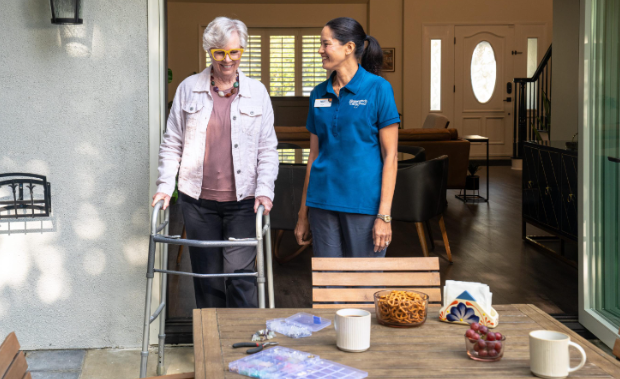
Most families do not need a complete remodel to support aging in place. Guided by what we see from other home safety and modification resources, we focus on a few key areas: safer pathways, better bathroom support, a restful bedroom, living and kitchen spaces that are easier to use, and the right amount of human and technological help.
When we walk through this process with clients, we often see their shoulders drop a little in relief. Once the first couple of changes are in place, the home begins to feel less fragile and more prepared. Loved ones feel safer visiting. Everyday tasks feel more manageable. Most importantly, people feel they can remain in the place that holds their memories without feeling trapped or afraid.
Comfortable aging at home is not about perfection. It is about taking steady, thoughtful steps so your home keeps working for you, instead of the other way around.
Comfort Focused Care For Aging At Home
→ In home support that helps make your home safer and more comfortable
→ Flexible care plans that fit your routines and aging at home goals
→ Local caregivers who understand Southwest Broward families and lifestyles
★★★★★ Trusted with a 4.9 rating from 62 reviews for compassionate home care in Southwest Broward
Home care tips: