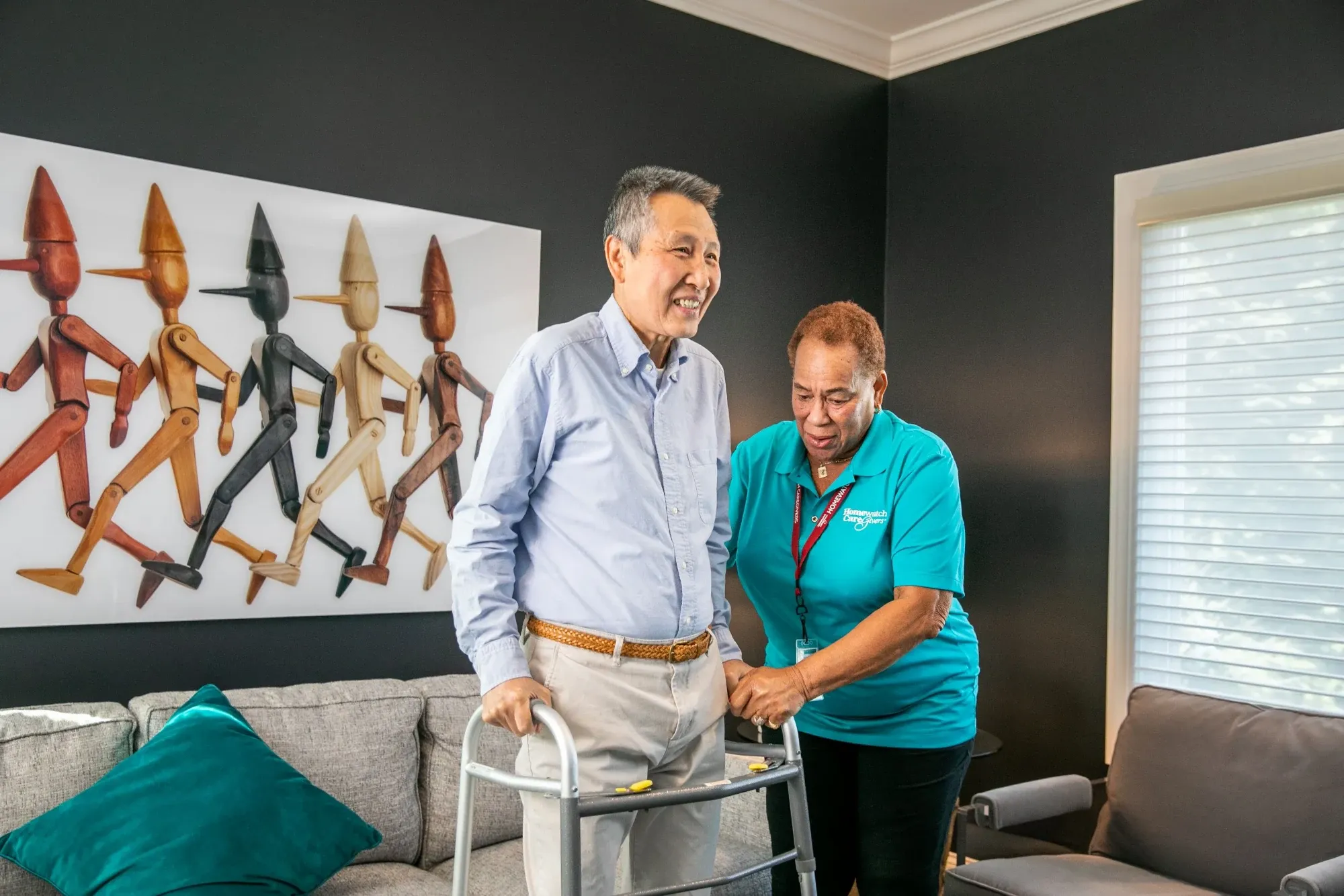


Customized Care Plans
Tailored to the unique needs of you or your loved ones.
When someone you love is nearing the end of life, everything becomes more urgent and more tender at the same time. There is so much to manage. Appointments, medications, daily care, family communication. And underneath all of it, grief that has already begun long before the end arrives.
Families in this situation often find themselves doing everything at once, with no time to simply be present with the person they love.
Homewatch CareGivers of Haddon Township provides non-medical end-of-life care for individuals and families in Haddon Township, NJ. Our caregivers can help with the practical daily needs that surround this stage of life, so that family members can step back from the logistics and spend more time simply being there.
Call (856) 347-8850 if you would like to talk through what support might look like for your family.

It helps to understand what this kind of care is and what it is not.
Homewatch CareGivers provides non-medical support. Our caregivers are not nurses or clinical hospice staff. They do not provide medical treatment, administer medications, or replace the role of a hospice team or palliative care provider.
What they do provide is the daily, hands-on, human support that clinical care cannot always offer. Help with bathing and personal hygiene. Meal preparation and gentle encouragement to eat and drink. Companionship and presence. Light housekeeping. Relief for family caregivers who are exhausted. Communication with family members who cannot be there in person.
This kind of care works alongside hospice or palliative care, not instead of it. Many families find that having a dedicated, consistent caregiver in place helps fill the daily support gaps that scheduled clinical visits may not cover.
The daily needs of someone approaching the end of life are real and often demanding. A caregiver can assist with:
The care plan is shaped around what your loved one needs at this stage, and around what the family needs to sustain themselves through it.
Family members who are primary caregivers during this stage are often carrying more than they can say out loud. They are often managing physical care, coordinating with medical teams, keeping other family members informed, and processing their own grief at the same time. That is not something any one person can sustain indefinitely without support.
Having a trained caregiver step in, even for part of the day, gives family members the chance to sleep, to eat, to handle other responsibilities, or simply to sit with their loved one without having to be in caregiver mode. That matters more than most people realize until they have it.
We can also help with communication support, keeping family members who live elsewhere informed about daily changes and care routines.
For most people, being at home at the end of life is not just a preference. It is deeply important. The familiar sounds of a house, a known view from a window, the presence of family nearby. These things matter in ways that are hard to put into words.
Non-medical home care makes it possible for more people to remain at home during this stage. Our caregivers approach this work with the understanding that they are guests in something sacred. They come prepared to help, to be present, and to follow the family’s lead on what is needed.
End-of-life caregiving asks something particular of the people who do it. It requires patience, emotional steadiness, and the ability to be present without being intrusive.
Every caregiver at Homewatch CareGivers passes thorough background checks and completes training before working with any client. We take particular care with caregiver matching at this stage, because the relationship between caregiver and family during this time is unlike any other. A caregiver who is the right fit can bring genuine comfort. One who is not can add friction at a moment when friction costs too much.
If your loved one also has dementia or memory-related needs, we can include caregivers with dementia care training and experience to support the additional challenges of memory care at end of life.
Homewatch CareGivers of Haddon Township provides end-of-life care throughout Haddon Township and nearby Camden County communities, including Collingswood, Haddonfield, Cherry Hill, Merchantville, Pennsauken, Oaklyn, Audubon, Westmont, and surrounding South Jersey areas.
There is no script for reaching out at a time like this. You may not have the words yet for exactly what you need.
That is fine. Call us and we will listen. We will help you figure out what kind of support makes sense for where your family is right now, with no pressure and no obligation.
Call Homewatch CareGivers of Haddon Township at (856) 347-8850. We will be here.
Professional care and administrative support! My family feels confident having them care for our 90 year old father. Highly recommend.
Patricia Kiernan
Jan 15, 2026
After a long and sometimes difficult journey trying to find the right home attendant for my dad, we finally found the perfect fit — and it has made all the difference. The attendant genuinely talks to him, listens to him, and treats him like a human being, not just a patient. The level of care, professionalism, and compassion has exceeded our expectations. This experience has brought our family so much peace of mind, and it has had a meaningful impact on my dad’s quality of life. We are deeply grateful for both the attendant and the company and highly recommend them.
Stephanie
Dec 31, 2025
Amazing, compassionate, understanding, helpful-- from every associate that has visited with and taken great care of my mom. I have already recommended Home watch CareGivers to friends who need help with their elderly parents.
Don Lynh
Dec 29, 2025
Personal attention from everyone who answers the phone right up to the owner, who came out to my mom's home to meet us face to face when we got started. Can't speak highly enough about how good the service has been so far. And with more flexibility and fewer restrictions & minimums than the other places I researched. Big thumbs up and highly recommend.
Rick Brown
Nov 20, 2025
Homewatch CareGivers were so amazing at a very difficult time for my family and & I. Everyone I dealt with was extremely helpful, caring, patient and professional. From the beginning phone call to scheduling and the caregivers I couldn't have felt more relaxed and supported with my decision to reach out to them. We thought we could care for my mom at home without professional help but soon found it started to get overwhelming. Reaching out to Homewatch was a true blessing. I would recommend them 100%.
Sherry Kane
Sep 21, 2025
Great service and wonderful people!!!
Mavis Mcguire
Aug 13, 2025
Professional & caring Home Health Care.
ReneeB.
Mar 20, 2025
All the staff at Homewatch Caregivers have been amazing. From the aides who assist my mom to the people on the inside, they are all caring, patient, understanding and flexible. I thank them so greatly for the work they do!
Margie Laitner
Mar 19, 2025
we have great caregivers yes they are like famliy we connect very depenable hardworking fexiable with the time and schedule
Isagani T. Ronsayro
Feb 21, 2025
Amazing help for my mother. The caregivers and management are spectacular.
Ari Goldberger
Mar 20, 2024
Authority Brands is the leading provider of in-home services, building brands that support the success of franchisees as well as better the lives of the homeowners we serve and the people we employ.