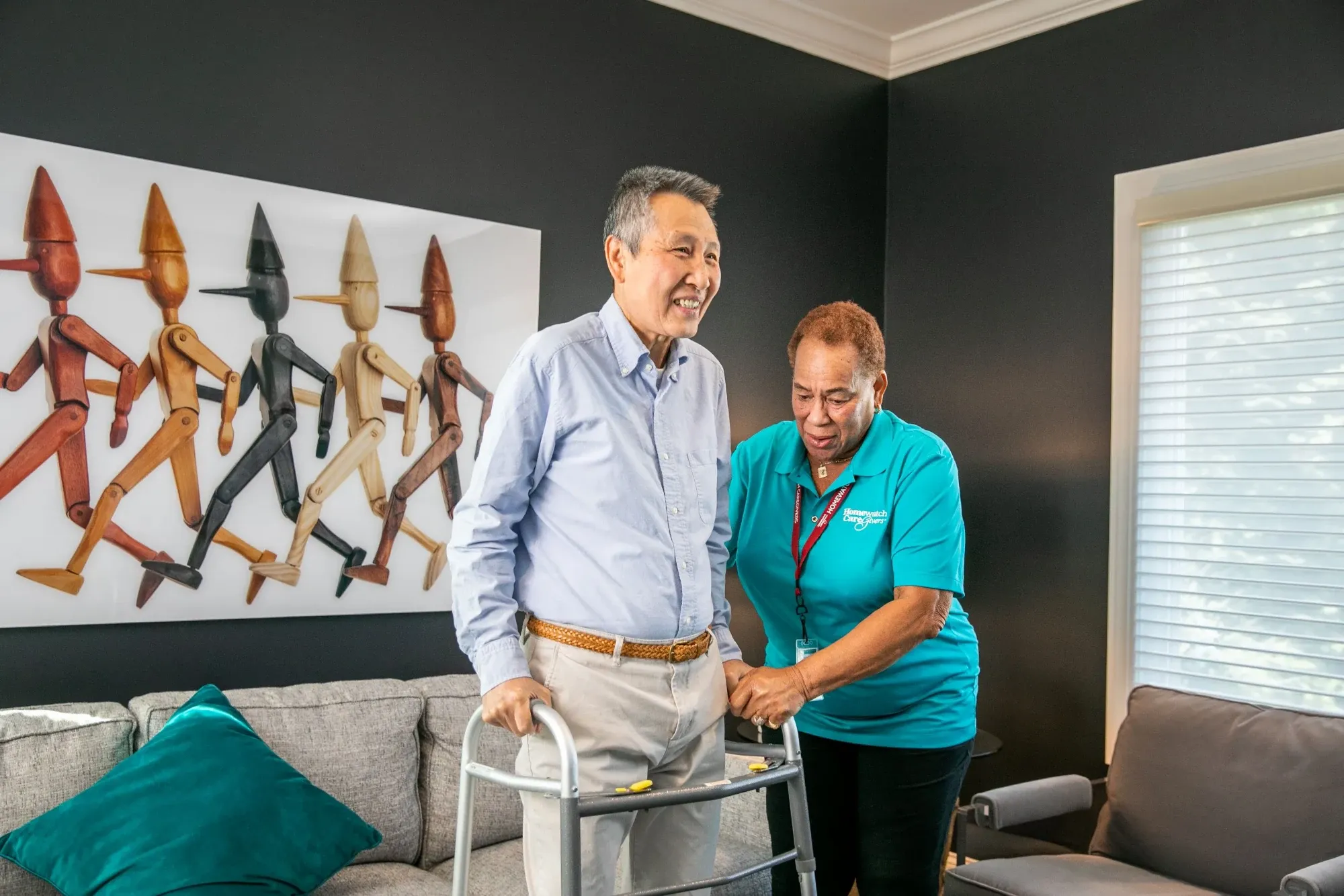
In-Home Care for Chronic Conditions in Silver Spring, MD
Living with a chronic condition can make familiar routines more difficult over time. Personal care, meals, mobility, transportation, household tasks, and medical appointments may require additional planning or hands-on assistance.
Homewatch CareGivers of Silver Spring provides personalized in-home care for chronic conditions in Silver Spring and nearby Montgomery County communities. Our caregivers offer non-medical assistance based on each person’s abilities, routines, preferences, and established care plan.
Support may include personal care, meal preparation, medication reminders, mobility assistance, transportation, companionship, light housekeeping, and respite for family caregivers.
Whether help is needed for a few hours each week, on a recurring daily schedule, overnight, or through more consistent coverage, our local team can help your family understand the available home care options.
|
Request a Home Care Consultation
Tell us about your loved one’s routines, current abilities, and the type of assistance you are considering.
Get Care Today | Call (301) 450-3394
|
Personalized Support for Life With a Chronic Condition
A chronic condition may affect movement, energy, balance, communication, memory, sleep, or the ability to complete daily activities. The type of assistance a person needs may also change from one day to another.
Home care can provide practical support without taking away the person’s ability to make choices and participate in familiar routines.
Our caregivers work from a personalized care plan that may address:
- Personal care needs
- Walking and mobility
- Meal preparation
- Medication reminders
- Transportation
- Household routines
- Companionship
- Appointment support
- Family caregiver relief
- Daytime or nighttime assistance
The goal is to provide help where it is needed while respecting the person’s independence, preferences, and established way of life.
Home care does not diagnose, treat, or medically manage chronic conditions. Clients should continue working with their physicians, therapists, nurses, pharmacists, and other appropriate healthcare professionals for clinical care and treatment decisions.
Who May Benefit From Chronic-Condition Home Care?
In-home support may be appropriate when a long-term condition begins affecting daily routines, mobility, household responsibilities, or a family caregiver’s ability to manage care alone.
A person may benefit from additional help when they:
- Have difficulty bathing, dressing, or grooming
- Need assistance walking or moving through the home
- Experience fatigue that makes daily tasks difficult
- Have trouble preparing meals
- Need reminders throughout the day
- No longer feel comfortable driving
- Require help getting to appointments
- Should not remain alone for extended periods
- Are returning home after hospitalization or rehabilitation
- Need support maintaining an established routine
- Have family caregivers who need regular breaks
- Require daytime, evening, overnight, or 24-hour assistance
Care needs should be based on the individual’s actual abilities and circumstances, not only the name of a diagnosis.
What Our Caregivers Can Help With
Personal Care
Caregivers can provide respectful assistance with bathing, grooming, dressing, toileting, incontinence care, oral hygiene, and other personal routines included in the care plan. The person should be encouraged to participate according to their abilities and comfort level.
Mobility and Transfer Assistance
Changes in balance, strength, coordination, or endurance can make it harder to move through the home.
Depending on the care plan, caregivers may assist with:
- Walking
- Standing
- Transfers
- Repositioning
- Moving between commonly used rooms
- Getting in or out of a chair
- Entering or exiting a vehicle
- Maintaining clear household pathways
The family should discuss specialized equipment, significant transfer needs, and professional mobility recommendations with the local care team before services begin.
Meal Preparation and Daily Routines
Fatigue, pain, movement changes, or difficulty standing can make shopping and cooking more challenging.
Caregivers may help with:
- Creating grocery lists
- Grocery shopping
- Preparing meals
- Serving meals
- Cleaning the kitchen
- Providing assistance during meals
- Supporting established hydration routines
- Following dietary instructions supplied by the family or appropriate healthcare professionals
Caregivers do not independently prescribe diets or make clinical nutrition decisions.
Medication Reminders
Caregivers may provide medication reminders according to an established schedule. Medication administration, changes, dosage decisions, and clinical monitoring should remain with authorized family members or appropriately licensed professionals unless the local agency is specifically approved to provide additional medication services.
Transportation and Appointment Support
A caregiver may provide transportation or accompany a client to medical appointments, therapy appointments, pharmacies, grocery stores, community activities, religious services, visits with family or friends, and personal errands. Transportation availability and requirements should be discussed during the care consultation.
Light Housekeeping
Caregivers may assist with household routines such as laundry, dishes, changing linens, vacuuming commonly used areas, tidying living spaces, taking out household trash, organizing frequently used items, and maintaining clear walkways. These services are intended to support the client’s daily living environment and are not a replacement for full residential cleaning services.
Companionship and Emotional Support
Living with a chronic condition can limit opportunities for social interaction and participation in favorite activities.
A caregiver can offer conversation, encouragement, and meaningful companionship through activities such as:
- Listening to music
- Reading
- Playing games
- Walking
- Gardening
- Preparing a meal together
- Looking through photographs
- Watching a favorite program
- Attending a community activity
- Participating in familiar hobbies
Activities should be selected around the person’s interests, energy, abilities, and preferences.
Chronic Conditions We May Support
Homewatch CareGivers of Silver Spring may provide non-medical home care for people living with a variety of long-term conditions.
These may include:
- Parkinson’s disease
- Arthritis
- Diabetes
- Heart disease
- Stroke-related limitations
- Chronic obstructive pulmonary disease
- Multiple sclerosis
- Neurological conditions
- Mobility-limiting conditions
- Other long-term illnesses that affect daily activities
The diagnosis alone does not determine whether home care is appropriate. The local team will need to understand the person’s specific routines, mobility, personal care needs, behavior, medical restrictions, home environment, and requested schedule before determining whether appropriate services are available.
Parkinson’s Home Care in Montgomery County
Parkinson’s disease can affect movement, balance, coordination, speech, sleep, and the ability to complete familiar daily activities.
As needs change, everyday tasks such as dressing, bathing, walking, preparing meals, getting to appointments, and managing a household may require additional time or assistance.
Homewatch CareGivers of Silver Spring provides non-medical support for individuals and families seeking Parkinson’s home care in Montgomery County.
Depending on the care plan, a caregiver may assist with:
- Bathing and grooming
- Dressing
- Meal preparation
- Walking and transfers
- Household routines
- Transportation
- Appointment accompaniment
- Medication reminders
- Companionship
- Light housekeeping
- Family communication
- Respite for a spouse or family care partner
- Daytime or overnight routines
Caregivers should follow the established care plan and any appropriate instructions provided by the family or healthcare professionals.
Home care does not diagnose Parkinson’s disease, change medication schedules, provide physical therapy, or replace medical, occupational, speech, or rehabilitation services.
|
Recommended Dedicated Parkinson’s Page
Create a separate page targeting Parkinson’s home care in Montgomery County while retaining this expanded overview on the chronic-conditions page.
Planned Parkinson’s Page
|
Support With Personal Care and Dressing
Movement changes can make buttons, zippers, shoes, bathing, grooming, and other personal routines more time-consuming.
A caregiver can provide assistance while allowing the person enough time to participate as fully as possible.
Support should not be rushed unnecessarily. The caregiver can follow the person’s usual routine, explain each step, offer choices, and provide only the level of assistance included in the care plan.
Mobility Support for People Living With Parkinson’s
Parkinson’s-related movement changes may affect walking, standing, turning, and moving between rooms.
A caregiver may:
- Provide assistance during walking
- Support established transfer routines
- Allow additional time for movement
- Keep commonly used pathways clear
- Place frequently used items within reach
- Follow mobility instructions provided by authorized professionals
- Assist with transportation and appointments
Caregivers should not create independent exercise or therapy programs. Any prescribed exercises or mobility techniques should come from the appropriate healthcare or rehabilitation professional.
Supporting Consistent Daily Routines
A predictable routine can help families coordinate meals, medication reminders, appointments, personal care, rest, and household responsibilities.
Depending on the care plan, caregivers may help the client follow an established:
- Morning routine
- Meal schedule
- Medication-reminder schedule
- Exercise or therapy schedule prescribed by a professional
- Appointment schedule
- Rest routine
- Evening routine
- Bedtime routine
Caregivers should report meaningful changes or concerns to the appropriate family contact according to agency procedures.
Support After Hospitalization or Rehabilitation
A person living with a chronic condition may need additional support after returning home from a hospital, rehabilitation facility, or medical procedure.
Caregivers may assist with meals, personal care, mobility, transportation, household tasks, medication reminders, appointment accompaniment, and following an established daily routine.
Caregivers do not provide clinical discharge management unless those services are being performed by appropriately licensed professionals. Families should provide the care team with relevant non-clinical instructions and contact the appropriate healthcare professional with medical questions.
|
Support During the Transition Home
Review non-medical assistance that may be available after hospitalization or rehabilitation.
Learn About After-Hospital Care
|
Respite for Family Caregivers
Family members often provide transportation, personal care, supervision, meals, household support, and coordination with healthcare professionals. These responsibilities can become difficult to manage without reliable help.
Respite care allows a family caregiver to step away while their loved one continues receiving assistance at home.
A family caregiver may use respite care to:
- Rest
- Sleep
- Work
- Attend an appointment
- Run errands
- Spend time with other family members
- Travel
- Manage household responsibilities
- Recover from an illness or procedure
- Take a recurring break from caregiving
Respite care may be used occasionally or incorporated into a consistent weekly schedule.
|
Support for Family Caregivers
Learn how temporary or recurring respite care can fit into a broader home care plan.
Learn About Respite Care
|
Flexible Home Care Schedules
Chronic-condition home care may be arranged around the person’s routines and the family’s availability.
Possible schedules may include:
- A few hours on selected days
- Recurring weekly visits
- Daily assistance
- Morning or evening care
- Overnight support
- Weekend care
- Temporary care after hospitalization
- Respite coverage
- Longer daily shifts
- Twenty-four-hour care
Availability depends on the requested hours, care needs, address, and caregiver availability. A chronic diagnosis does not automatically mean that someone needs continuous care. The schedule should reflect actual assistance and supervision needs.
|
Explore Continuous Care Options
Learn how coordinated daytime and overnight support may be structured when needs extend across the full day.
Learn About 24-Hour Home Care
|
How We Develop a Personalized Care Plan
Before care begins, our team takes time to understand the person and the family’s current concerns.
The care consultation may address:
- Daily routines
- Personal care requirements
- Mobility
- Transfers
- Meal preferences
- Medication-reminder schedules
- Transportation needs
- Communication preferences
- Sleep patterns
- Household responsibilities
- Interests and activities
- Home safety concerns
- Family involvement
- Requested days and hours
- Existing professional recommendations
Caregiver matching may consider the client’s care needs, schedule, personality, communication style, preferences, and caregiver availability.
Families should communicate changes in abilities, routines, symptoms, schedules, or safety concerns so the care arrangement can be reviewed when appropriate.
Why Families Choose Homewatch CareGivers of Silver Spring
Choosing in-home care requires trust and clear communication.
Our approach emphasizes:
- Personalized care planning
- Respect for established routines
- Caregiver screening and training
- Thoughtful caregiver matching
- Communication with clients and families
- Flexible scheduling based on availability
- Support for family caregivers
- Meaningful companionship
- Care plans that can be reviewed as needs change
Families are encouraged to ask questions, provide detailed information, and share feedback throughout the care relationship.
Chronic-Condition Home Care in Silver Spring and Montgomery County
Homewatch CareGivers of Silver Spring provides in-home support within Silver Spring and nearby communities in its approved Montgomery County service area.
Availability may depend on:
- The client’s address
- Requested schedule
- Number of care hours
- Mobility and transfer needs
- Transportation requirements
- Type of assistance requested
- Caregiver availability
Contact the local office to confirm whether services are available for a specific address and schedule.
|
Confirm Local Availability
Review the communities currently listed within the Silver Spring office service area.
View Areas We Serve
|
Trusted by Clients and Families
|
“Hello, my experience with this company is excellent. I have a caregiver who is taking care of my father, and he is very happy with her. She is always supportive when I communicate my concerns.”
Linda Vaughn | December 29, 2025
|
|
“We have been using Homewatch CareGivers for the past four years and are satisfied with the excellent services they have provided. The caregivers have provided professional and caring service.”
Lilac Thomas | April 7, 2025
|
|
“From the very beginning, everything was professional, informative, and cordial. We were impressed by the effort made to understand what the continuing needs might be and by the caregiver match.”
Katherine James | October 23, 2023
|
|
Read Additional Feedback
Review experiences shared by clients, families, and caregivers.
View More Reviews
|
Request a Chronic-Condition Home Care Consultation
Managing a long-term condition can affect the entire family.
Tell us about your loved one’s routines, current abilities, and the type of assistance you are considering. Our Silver Spring team can help you understand the available home care options.
Homewatch CareGivers of Silver Spring
10018 B Colesville Road
Silver Spring, MD 20901
Get Care Today | Call (301) 450-3394