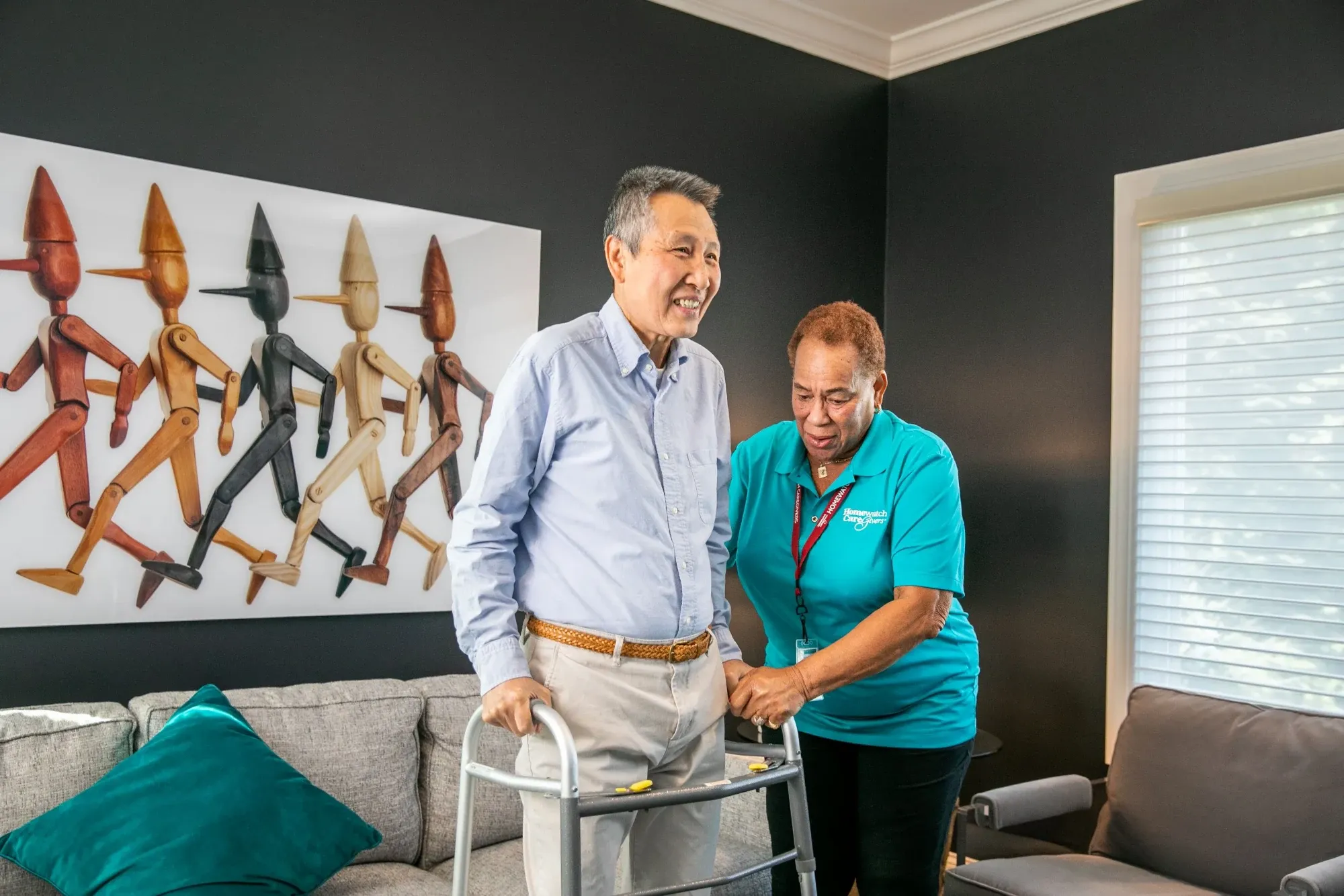


Customized Care Plans
Tailored to the unique needs of you or your loved ones.
Amazing customer service, workers were amazing easy to understand and made everything simple to follow!!
Bobby
May 21, 2026
Hello my experience with this company is excellent. I have a caregiver who is taking care of my father and he very happy with her. He is 98 years old and speaks very highly about her. I have had communications with her and she is always very supportive in what my concerns may be. I am not sure if I should mention her name but it is Hana. She is definitely a KEEPER. Linda
Linda Vaughn
Dec 29, 2025
We have been using HomeWatch CareGiver for the past four years (except for the eleven months while I was overseas) and is satisfied with their excellent services they have provided. The caregivers have provided professional and caring service. I am extremely grateful for their continued assistance.
Lilac Thomas
Apr 07, 2025
I feel so lucky to have stumbled upon this agency. I did a lot of research and calling around… I even tried another agency for a couple of months and didn’t have the best experience, to say the least. So I started my research again and had the pleasure of speaking with Gauri. She was so accommodating with my schedule and we really hit it off when we met in person. She was so thorough and thoughtful with her questions and I could tell she really wanted to find me the right match. I also met with the nurse a couple of days later and she took copious notes to really grasp my special needs. Well, low and behold, I was matched with the perfect Aide at the perfect time and I cannot imagine my life without her. She is kind and motivational, and that’s exactly what I need. Due to health insurance lack of reimbursement and an upcoming change in coverage I have to take a break for financial reasons but I’m really hoping to start up with my lovely Aide again very soon. You can’t go wrong with Homewatch CareGivers of Silver Spring. I never need to research care giving agencies again.
K Brain
Dec 13, 2024
Every caregiver we have gotten for regular care or substitute care have been fantastic caregivers. We are very happy we found Homewatch for our loved one who has memory issues.
Nancy Berry
Aug 08, 2024
So good in every way from the caring competent and happy to help aides to the responsive, flexible And thoughtful administration. I would give this agency a sixth star.
Elaine Jacobson
Mar 26, 2024
From the very beginning--my first conversation with Gaudi, the owner of the business--everything was very professional, informative, and cordial. We selected this care giver after interviewing three agencies and were drawn to this one, even though it was neither the most nor the least expensive. We were especially impressed by the fact that a nurse accompanied Gaudi on the first visit, and the nurse asked to view the home as she looked for ways in which the potential client was being cared for (e.g., double bannisters, shower chair, grip bars, etc.) and what the continuing needs might be. We were never pressured, and our follow-up calls were responded to by Anneli, the Operations Manager, or Gaudi herself, with every accommodation and understanding. The match with our care giver, Bintou, has been extraordinarily fine; Bintou is prompt, friendly, professional, and she even offers to do various tasks in addition to those already planned. We are very pleased with this agency and would recommend it to anyone seeking home care. Katherine J
Katherine James
Oct 23, 2023
This is a great place to work I’m so grateful to be able to be part of the team
Julia Karen Alvarado
Jul 20, 2023
Great employer to work for. The owner cares as much about her employees' as her clients' well-being.
Anneli Freeman
Jul 12, 2023
Deborah is a excellent caregiver!
Vanessa Castro
Aug 23, 2022
Authority Brands is the leading provider of in-home services, building brands that support the success of franchisees as well as better the lives of the homeowners we serve and the people we employ.