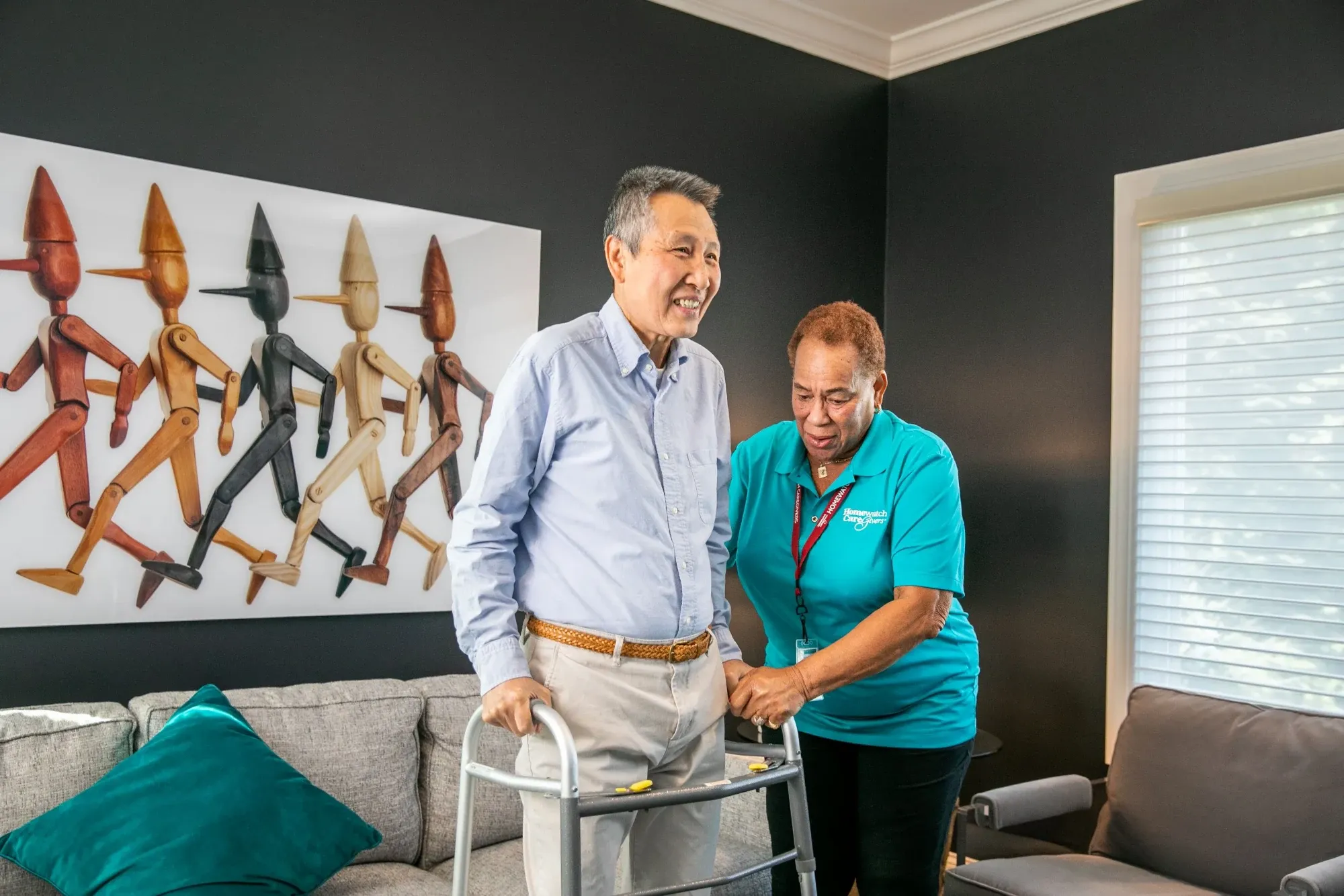
When someone you love should not spend long periods alone, a few hours of care may no longer feel like enough. At the same time, they may not need an awake caregiver providing continuous assistance throughout the night.
Live-in home care can provide a reassuring middle ground.
Homewatch CareGivers of Sterling provides personalized live-in home care for older adults and others who benefit from having a caregiver reside in the home. Support may include personal care, meal preparation, medication reminders, mobility assistance, companionship, and help maintaining familiar routines.
Live-in care may be arranged for a short period or as an ongoing solution. Every plan is built around the client’s needs, abilities, preferences, health conditions, and home environment.
Call (703) 215-2230 to discuss whether live-in care is appropriate for your family.
What Is Live-In Home Care?
Live-in home care means a professional caregiver stays in the client’s home and provides support throughout the day.
The caregiver learns the client’s normal routine, preferred meals, personal care needs, mobility concerns, and daily habits. This familiarity can make the home feel calmer and reduce the disruption caused by frequent caregiver changes.
A live-in caregiver is present in the home but may not always be in the same room as the client. Live-in care also does not mean the caregiver remains awake and actively working every hour of the day and night.
The caregiver is typically available to provide care for up to 16 hours each day. The caregiver also receives eight hours of private time, including at least six uninterrupted hours for sleep.
Occasionally, a client may have a difficult night and need additional help. However, someone who regularly needs assistance throughout the night may be better served by awake 24-hour care provided by caregivers working in shifts.
What Can a Live-In Caregiver Help With?
Each care plan is different. Depending on the client’s needs, live-in care may include:
- Bathing, dressing, grooming, and toileting
- Mobility and transfer assistance
- Meal planning and preparation
- Light housekeeping and laundry
- Transportation and errands
- Companionship and conversation
- Support with hobbies and social activities
- Help following established post-hospital or post-procedure instructions
- Assistance with approved wound-care routines or reminders
- Observation of changes in behavior, mobility, appetite, or general condition
- Communication with family members and care professionals
- Dementia and memory care routines
Families can learn more about personal care services in Sterling for help with bathing, dressing, grooming, mobility, and other daily activities.
Our person-centered approach considers more than a diagnosis or list of tasks. We take time to understand how the client prefers to spend the day and what helps them feel secure.
Who May Benefit From Live-In Care?
Live-in care may be appropriate for someone who should not be left alone for extended periods but does not require continuous awake assistance.
This may include:
- An older adult experiencing reduced mobility or an increased fall risk
- Someone living with dementia who usually sleeps through the night
- A person managing a chronic health condition
- Someone returning home after hospitalization or rehabilitation
- A client recovering from surgery or another medical procedure
- An individual who needs regular personal care and meal assistance
- A spouse who can no longer manage all caregiving responsibilities alone
- Someone whose family lives too far away to provide daily assistance
Live-in care may be especially valuable for someone receiving in-home dementia care who benefits from familiar people and predictable routines.
Before services begin, our team evaluates the client’s routine, overnight needs, home layout, safety concerns, and level of assistance.
Greater Continuity With Fewer Caregiver Changes
Families often value live-in care because it can create greater continuity.
Instead of five or more caregivers arriving and leaving during the week, one or two caregivers may alternate over longer periods. This allows caregivers to become more familiar with the client’s personality, preferences, routines, and changing needs.
Predictable routines and trusted relationships can be especially reassuring for clients living with dementia or cognitive decline. Personal care, meals, and daily activities may feel less stressful when provided by someone familiar.
Continuity also helps caregivers recognize meaningful changes. A caregiver who knows the client’s normal behavior may notice changes in sleep, appetite, balance, mood, or confusion and communicate those concerns to the family.
Short-Term Live-In Home Care in Sterling
Live-in care does not have to be a permanent arrangement.
Short-term live-in care can provide additional support during a vulnerable or transitional period. It gives families the reassurance of having a caregiver in the home without requiring a long-term commitment.
Returning Home After a Hospital or Rehabilitation Stay
The first several days at home can be challenging after an illness, injury, surgery, or rehabilitation stay.
A live-in caregiver can assist with mobility, personal care, meal preparation, medication reminders, transportation to appointments, and established recovery routines.
The caregiver can also observe unexpected changes and communicate concerns to the family or appropriate medical professionals.
Families planning a discharge can also review our after-hospital care services.
Support After a Procedure
Some procedures leave a person tired, unsteady, or temporarily unable to manage normal activities alone.
Short-term live-in care may include safe bathroom assistance, meal preparation, mobility support, personal care, medication reminders, and help following approved wound-care instructions.
Care can continue while the client regains strength and confidence.
Help While a Family Caregiver Is Away
Family caregivers sometimes need to travel for work, attend an important event, or take a much-needed vacation.
A short-term live-in caregiver can maintain the client’s familiar schedule while the primary caregiver is away. Support may include meals, personal care, companionship, household tasks, medication reminders, and transportation.
Families may also explore respite care in Sterling when they need temporary or periodic relief from caregiving responsibilities.
Live-In Care Compared With 24-Hour and Hourly Care
Live-in care and 24-hour care both provide substantial support, but they are not the same.
Live-In Care
A caregiver resides in the home and receives designated sleep and personal time.
The client must be independent enough to allow the caregiver to sleep, eat, and attend to normal personal needs. The client must also be able to remain safe while the caregiver is resting.
Awake 24-Hour Care
With awake 24-hour care, caregivers usually work scheduled shifts, which may be approximately 12 hours each. One caregiver remains awake and available until the next caregiver arrives.
A brief handoff allows the incoming caregiver to receive important updates before the outgoing caregiver leaves. The client or family does not need to manage the shift change or open the door each time.
The outgoing caregiver remains until relief arrives, including during difficult weather or unexpected delays.
This arrangement may be more appropriate when the client:
- Frequently wakes and needs help overnight
- Has ongoing wandering concerns
- Requires regular repositioning
- Cannot call for help during an emergency
- Needs continuous observation or awake supervision
- Has frequent nighttime toileting or transfer needs
Hourly Care
Hourly care does not have to cover the entire day. It may provide support during specific mornings, afternoons, evenings, or overnight periods.
When no family member is present between shifts, the client must be able to remain alone safely and respond appropriately during an emergency.
Our team can explain these options during an in-home consultation.
Preparing the Home for a Live-In Caregiver
The client or family must provide the caregiver with a comfortable bed in a private area of the home.
The caregiver also needs reasonable access to meals and household facilities. In many arrangements, the caregiver prepares meals that are shared with the client.
The family is responsible for providing appropriate lodging and meals for the caregiver.
These practical details are reviewed before care begins. Clear expectations help create a respectful and comfortable environment for the client, caregiver, and family.
Benefits of Live-In Home Care
Familiarity
The client can remain in the home they know, surrounded by familiar belongings, memories, neighbors, and routines.
Remaining at home may reduce the confusion and anxiety that can accompany a move to an unfamiliar facility.
Personalized Support
Care is built around the individual’s needs, habits, preferences, health conditions, and abilities.
Support may include bathing, dressing, housekeeping, meals, mobility, medication reminders, and companionship.
Greater Independence
Clients continue making choices about meals, clothing, activities, visitors, and daily schedules. This helps protect autonomy, confidence, and self-esteem.
Companionship
A caregiver’s presence may reduce loneliness and isolation. Caregivers can encourage conversation, hobbies, social interaction, and meaningful activities.
Having consistent support at home may also make it easier for family members and friends to visit and spend quality time with the client.
Fewer Caregiver Changes
One or two caregivers may alternate over longer stretches of time, creating a more stable routine than multiple short shifts.
Family Reassurance
Families know someone is residing in the home to assist with daily needs and communicate important changes.
Potential Cost Advantages
Depending on the client’s schedule and support needs, live-in care may be more cost-effective than arranging multiple caregivers in continuous shifts.
Actual costs depend on the care plan, schedule, level of support, and service duration.
Live-In Care Across Sterling and Loudoun County
Homewatch CareGivers of Sterling supports families throughout Sterling, Ashburn, Leesburg, Herndon, Reston, Great Falls, Loudoun County, and nearby communities.
Whether your family needs temporary support following a hospital stay or a dependable long-term arrangement, we can develop a plan around your loved one’s daily life.
View all of the communities served by Homewatch CareGivers of Sterling.
Find the Right Level of Care
Choosing between hourly care, live-in care, and awake 24-hour care can feel overwhelming. You do not have to make that decision alone.
Homewatch CareGivers of Sterling will learn about your loved one’s routine, overnight needs, health concerns, home environment, and personal preferences. We can then recommend the care structure that best fits the situation.
Call (703) 215-2230 or contact us online to schedule an introductory consultation.